
tecnology extension
2020-04-01 13:35
Hi, my name is Elvis and together with my wife Liliana, an amazing team and a group of local, committed growers we produce organic ginger and turmeric in the heart of Peru. Many thanks for buying our products.
As an agronomist I have been involved in organic ginger and turmeric production in this region since 2005. I have always been fascinated about how you can optimize production and processing techniques in order to improve the quality and efficiency of the supply chain and over the past decades I have learned a tremendous amount. From the beginning I have always worked according to the organic principles. This is because my parents were also producing organically but without the certifications. I guess this philosophy motivated me to study agronomy so that I could continue with the concept of farming in harmony with nature to improve the production of these sustainable and healthy products.
In May of 2018, together with my wife Liliana Dávila we set up our own company Hamillton Farm. Today we have a team of six agronomists to monitor our producers during the whole growing cycle. We also have an excellent washing, sorting and drying facility.
What makes Hamilton Farm so unique ?
Elvis: There are many organic ginger export companies in this area but what makes us so unique is that through our agronomists we cooperate, monitor and support our farmers. Many of the other companies do not even know where the products are coming from.
Why did you make the choice for organic?
Elvis: From the beginning I have always worked according to the organic principles. This is because my parents were also producing organically but without the certifications. I guess this philosophy motivated me to study agronomy so that I could continue with the concept of farming in harmony with nature to improve production the production of these sustainable and healthy products. Furthermore, adopting organic management helps us to take care of the environment and the land that provides us with the food to live!
What are the biggest challenges in organic ginger production?
Elvis: There are many challenges, the biggest is to make farmers understand that organic production is an important tool to protect the environment, our lives and that of our children.
What are the biggest rewards?
Elvis: The biggest reward is to see that many producers are joining the organic project and are taking on this new challenge as a philosophy of life. This movement connects the environment with society and is creating decent work conditions today and in the future.
How do you ensure no virgin forests are cut down to create land for ginger and turmeric production?
Elvis: We talk about it during meetings and training sessions with our farmers. We tell them not to plant crops in areas of virgin vegetation. Furthermore, it is the company's policy is not to work with producers that plant in a virgin forest field.
SOIL
The soil in this region is rich and full of life. The structure and the fact that it is so vibrant ensures that the drainage is very good. Our farmers work with an extended crop rotation system. First they plant ginger. For the next two to three years they allow the soil to rest. This form of crop rotation also protects the soil from erosion.
BIODIVERSITY
Organic agriculture is all about farming together with nature and protecting the natural biodiversity in an environmentally friendly manner. One of the biggest issues in this area is the loss of virgin rainforest. For us this is a big deal and we refuse to work with producers that are planting in areas where virgin rainforest has been cleared. Furthermore, we talk about this subject during meetings and training sessions with our farmers.
SOCIETY
We believe that education is the only tool that will allow today's children to fulfill their dreams and improve their quality of life. Education allows us to grow as a person, family, as a society with instilled human values.
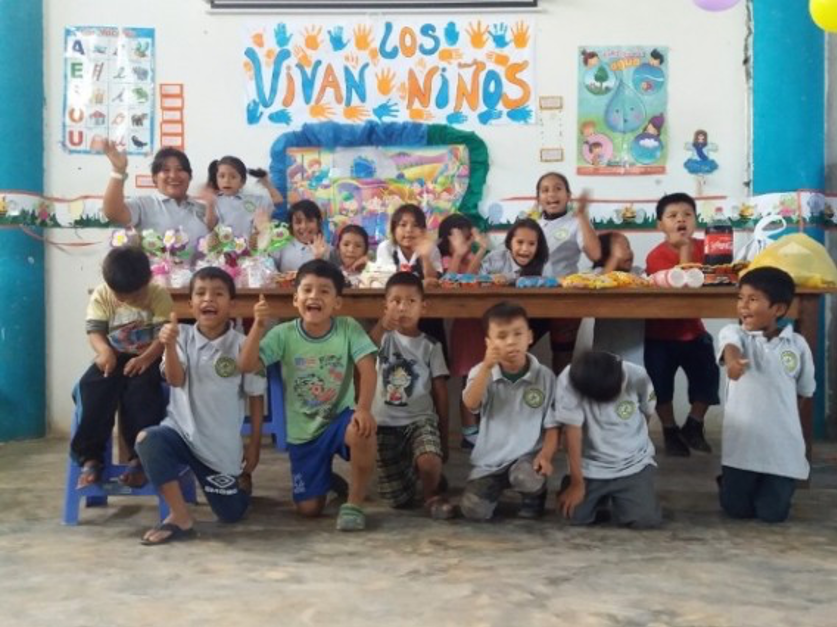
We set up a special school because we saw that the children of our partners and team members were not receiving a good education. A solid education is not only good for the children, it is a way of rewarding the efforts of our workers. Last year unfortunately, we had to close the school due to lack of funding but this year we want to continue with this project. We know that it is not easy, but we think it is possible when we collaborate with our partners.
ECONOMY
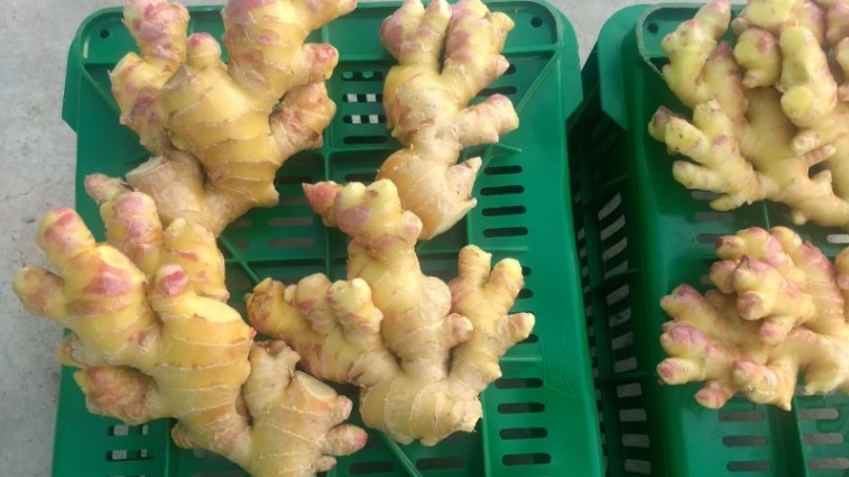
Ginger production started in Europe in the 1940’s following an influx of Chinese citizens escaping the second world war. They brought with them their customs, language and food supplies including ginger. When they started cultivating the product in this area the production was only for local consumption. In 2005, I realized that the Peruvian ginger could also be exported so I started a ginger export project in Pichanaqui. I began to develop the techniques in order to obtain a good quality for the American market. The techniques that needed to be developed were focusing on field management, transport to the production facility. There we looked at the processes including washing, chopping, drying and packing.
CLIMATE
The tropical climate in this part of Peru is ideal for growing exotic fruits and vegetables and since we do not use any energy draining chemical fertilizers and pesticides, we can say that our products will have a relatively low carbon footprint. Regarding transport to Europe, the ginger and turmeric is transported by boat.
WATER
In this part of the world we receive a lot rain and since we do not use any chemicals, we do not have any negative impact on the water system.
Acknowledgements: Thanks for Nature&More provide Source material for our public welfare publicity
转发0评论1

wheatblue
2020-10-15 11:40
interesting story.